

Policy Reports
The Buckeye Institute: Ohio Must Adopt SNAP Reforms to Avoid Bill for Waste, Fraud & Abuse
May 13, 2026

In a new policy memo, The Buckeye Institute urged Ohio policymakers to pursue reforms to the Supplemental Nutrition Assistance Program (SNAP) to avoid being hit with a $321 million bill for high rates of fraud, waste, and abuse. Rea S. Hederman Jr., vice president of policy at The Buckeye Institute, outlined reforms that are necessary because the federal government “now requires states with a six percent or higher erroneous payment rate to pay between five and 15 percent of benefit costs.”
Federal Carbon Tax Would Devastate U.S. Economy, Buckeye Institute Economic Modeling Reveals
April 14, 2026

In a new policy report, Damaging Consequences, The Buckeye Institute models the economic impact that a federal carbon tax would have on the U.S. economy, job creation, tax collection, consumer spending, and business investment. Buckeye’s economic modeling revealed that an $800 billion annual carbon tax would cost every American $2,900 annually and devastate the U.S. economy, resulting in $1.2 trillion in economic loss in 2034.
New Buckeye Institute Report Exposes Backdoor Scheme to Dictate America’s Energy Policy
April 09, 2026

In a new policy report, The Buckeye Institute exposes how public nuisance legal theory is being used to attack energy companies and set U.S. energy policy through the courts. “The rash of public nuisance climate lawsuits spreading across the nation is a dangerous attempt to use the courts to force communities to adopt net-zero carbon-emissions policies. This effort to impose an ESG agenda through the courts, after failing to do so through Congress, would financially cripple energy companies and threaten the U.S. economy.”
The Buckeye Institute: Fiscal Flexibility Must be Priority in Capital Budget
March 19, 2026

In a new policy memo, The Buckeye Institute cautioned lawmakers to preserve fiscal flexibility in this year’s capital budget so the state can address long-term funding obligations and federal cost-shifting for social welfare programs like SNAP and Medicaid. The memo echoed concerns raised in a piece in The Hill, which highlighted the uncertainty states face regarding “federal cost-sharing changes for SNAP and stricter federal scrutiny of welfare spending and fraud, and rising long-term care and Medicaid obligations.”
The Buckeye Institute: Data Center Tariff Undermines Ohio’s Competitive Edge
March 16, 2026

As the Ohio Supreme Court prepares to consider whether American Electric Power’s (AEP) data center tariff plan constitutes discriminatory pricing, The Buckeye Institute is out with a new policy brief—Undermining Ohio’s Competitive Edge—that outlines how the pricing plan harms Ohio’s economy and will leave residential ratepayers on the hook for infrastructure costs. “While PUCO’s approval of AEP’s data center tariff was a short-term win for the utility, it will produce a long-term loss for Ohio.”
The Buckeye Institute Policy Brief Makes Case for Targeted Preemption Laws
March 11, 2026

As the Ohio Supreme Court prepares to hear Columbus v. Ohio—a case challenging Ohio’s preemption power—The Buckeye Institute released its most recent policy brief, Striking a Balance: Local Governance, Individual Rights & Economic Growth, which makes the case for a predictable and uniform regulatory environment across the state that supports pro-growth activities and respects constitutional rights. “State preemption is a necessary tool to protect fundamental rights, promote economic opportunity, and ensure regulatory clarity.”
Buckeye Institute Modeling Reveals Cutting Kentucky’s Income Tax Results in Nearly $2B in Economic Growth
March 09, 2026
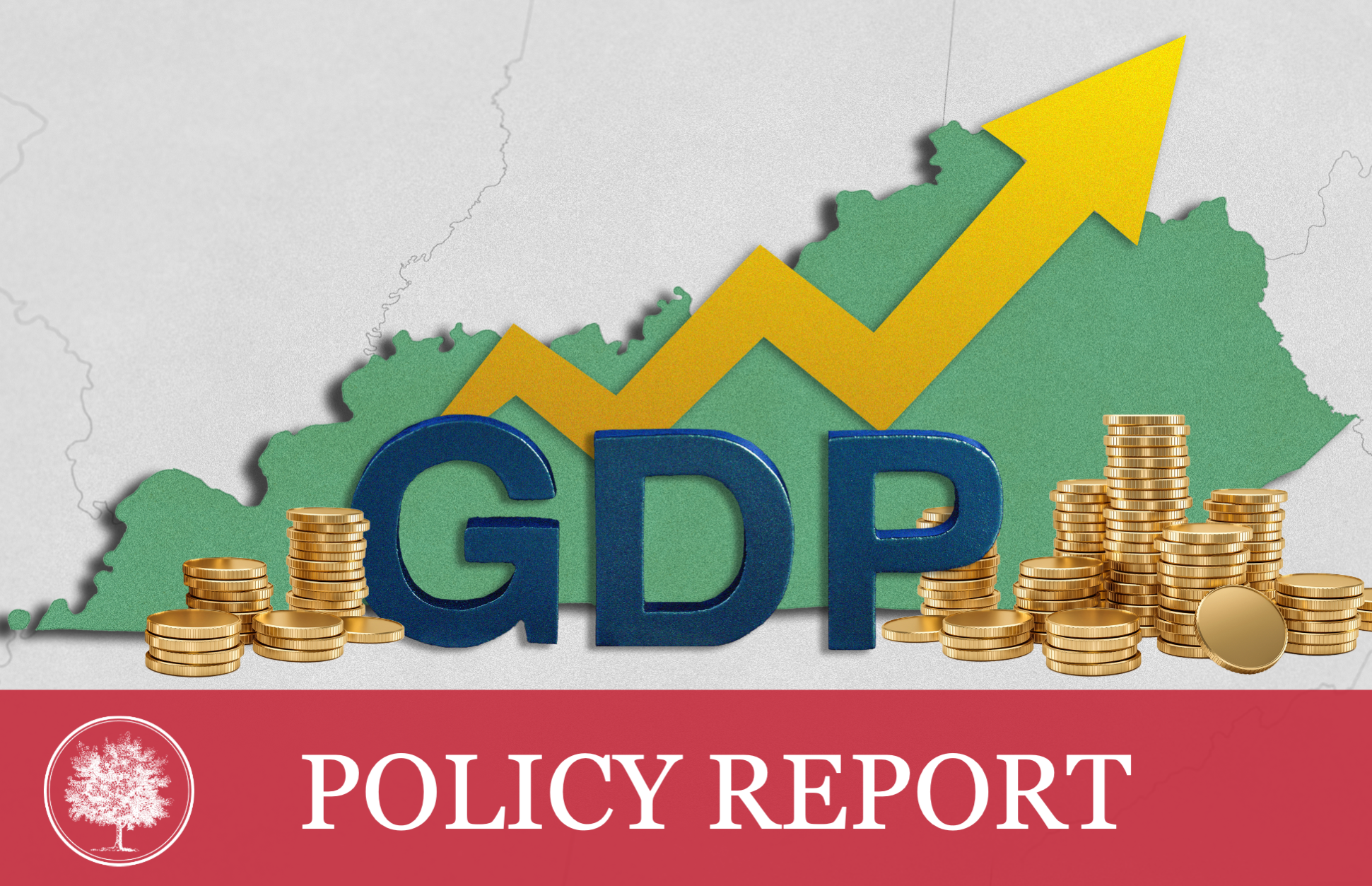
A new report, Continuing Kentucky’s Tax Reform Efforts, by The Buckeye Institute, found that cutting the commonwealth’s personal income tax to three percent would create nearly $2 billion in economic growth and 7,000 new jobs. The Buckeye Institute partnered with Kentucky’s Bluegrass Institute to conduct the research. “To compete with its lower-tax neighbors and remain economically competitive, Kentucky must continue its pro-growth reforms.”
Structure Over Spectacle: The Supreme Court's 2024 Term
December 23, 2025
“After several years of headline-grabbing decisions that reshaped national political debate—from abortion and affirmative action to religious liberty and presidential power—in its October 2024 Term, the United States Supreme Court largely stepped back from the culture war flashpoints and focused on institutional structure, procedural discipline, and interpretive clarity.” In Structure Over Spectacle, The Buckeye Institute’s David C. Tryon and the Defense of Freedom Institute for Policy Studies’ Donald A. Daugherty look back on the U.S. Supreme Court’s 2024 term.
The Buckeye Institute Releases Economic Freedom of North America 2025 Report
December 15, 2025
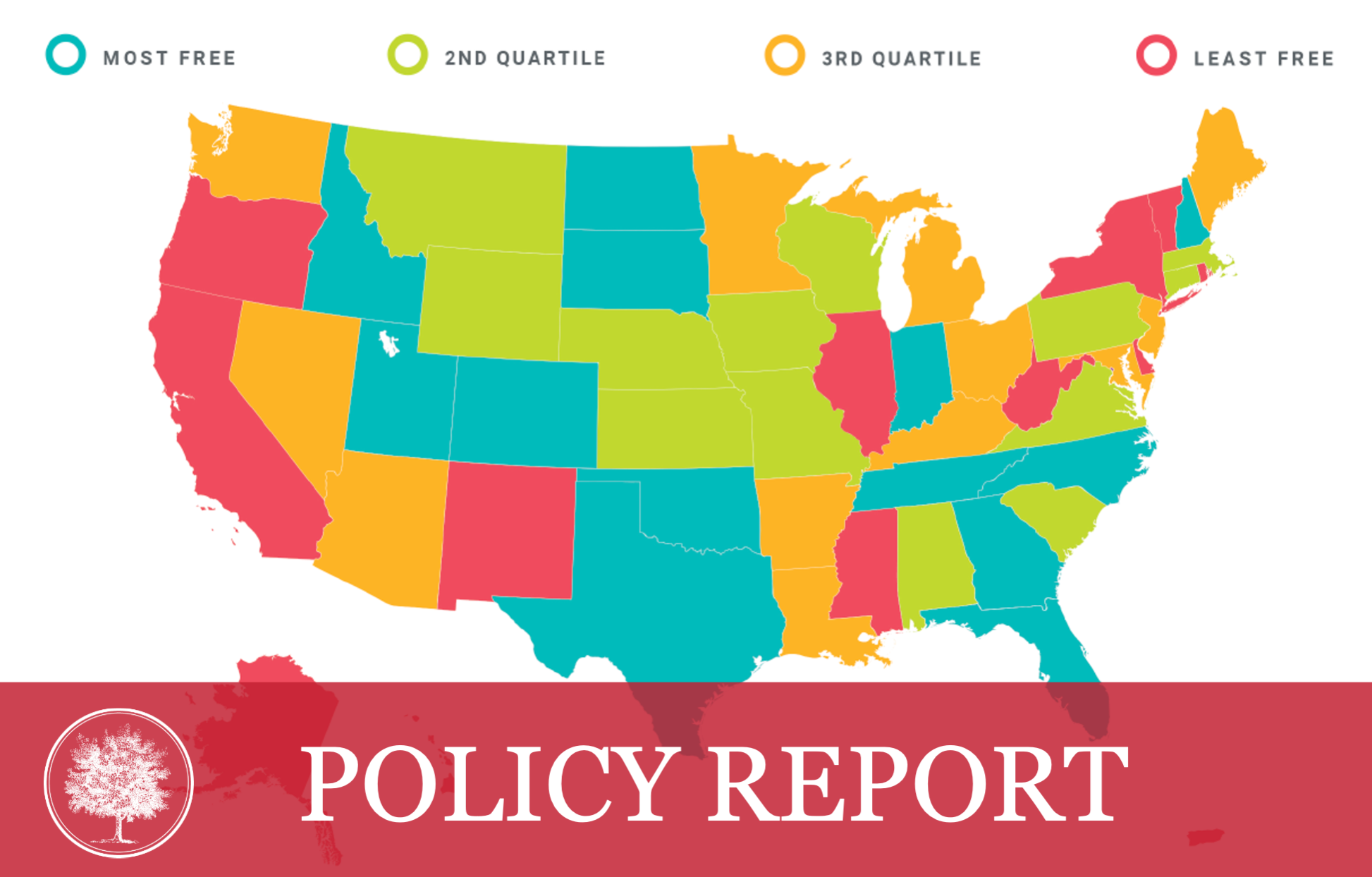
In 2025, Ohio maintained its 35th place ranking in the Economic Freedom of North America 2025 (EFNA) report for the second year in a row. The report, released by The Buckeye Institute in partnership with Canada’s Fraser Institute, ranks all states and provinces in the United States, Canada, and Mexico, as well as the U.S. territory of Puerto Rico, based on economic freedom, measured by government spending, taxation, and labor-market freedom.
The Buckeye Institute: Federal Reform Efforts Best Path to Fix Broken 340B Program
December 03, 2025
As Ohio lawmakers look for solutions to fix a broken 340B drug pricing program, The Buckeye Institute released a new policy brief—The 340B Fix: Federal Bipartisan Effort Best Path to Reform—outlining how the program came to neglect its well-intended goals and urged Ohio policymakers to encourage federal reforms percolating in Washington. “The 340B program requires federal reforms to fix the broken program, and Ohio leaders should encourage that effort.”