

Federal Carbon Tax Would Devastate U.S. Economy, Buckeye Institute Economic Modeling Reveals
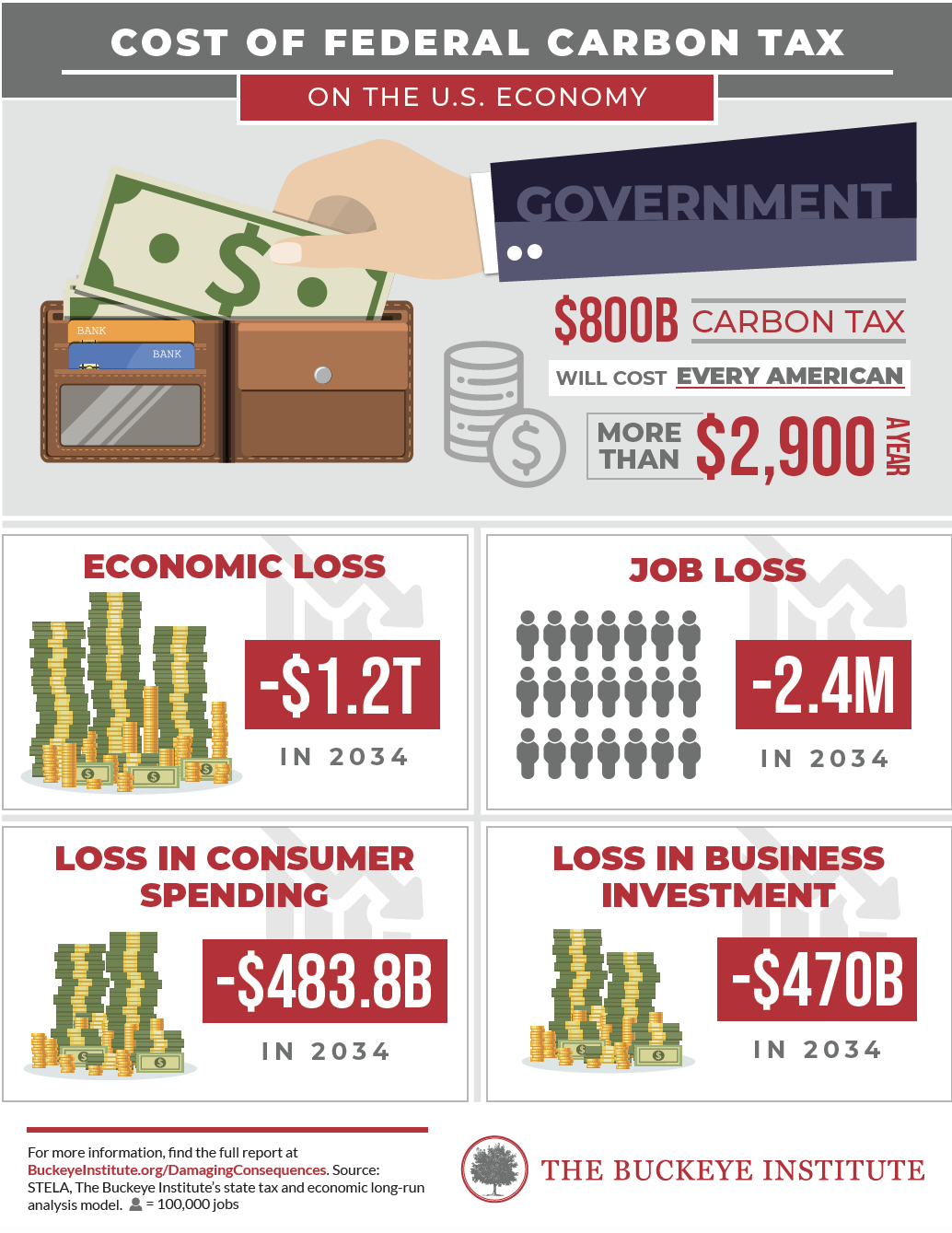
Apr 14, 2026Columbus, OH – In a new policy report, Damaging Consequences, The Buckeye Institute models the economic impact that a federal carbon tax would have on the U.S. economy, job creation, tax collection, consumer spending, and business investment. Buckeye’s economic modeling revealed that an $800 billion annual carbon tax would cost every American $2,900 annually and devastate the U.S. economy, resulting in $1.2 trillion in economic loss in 2034.
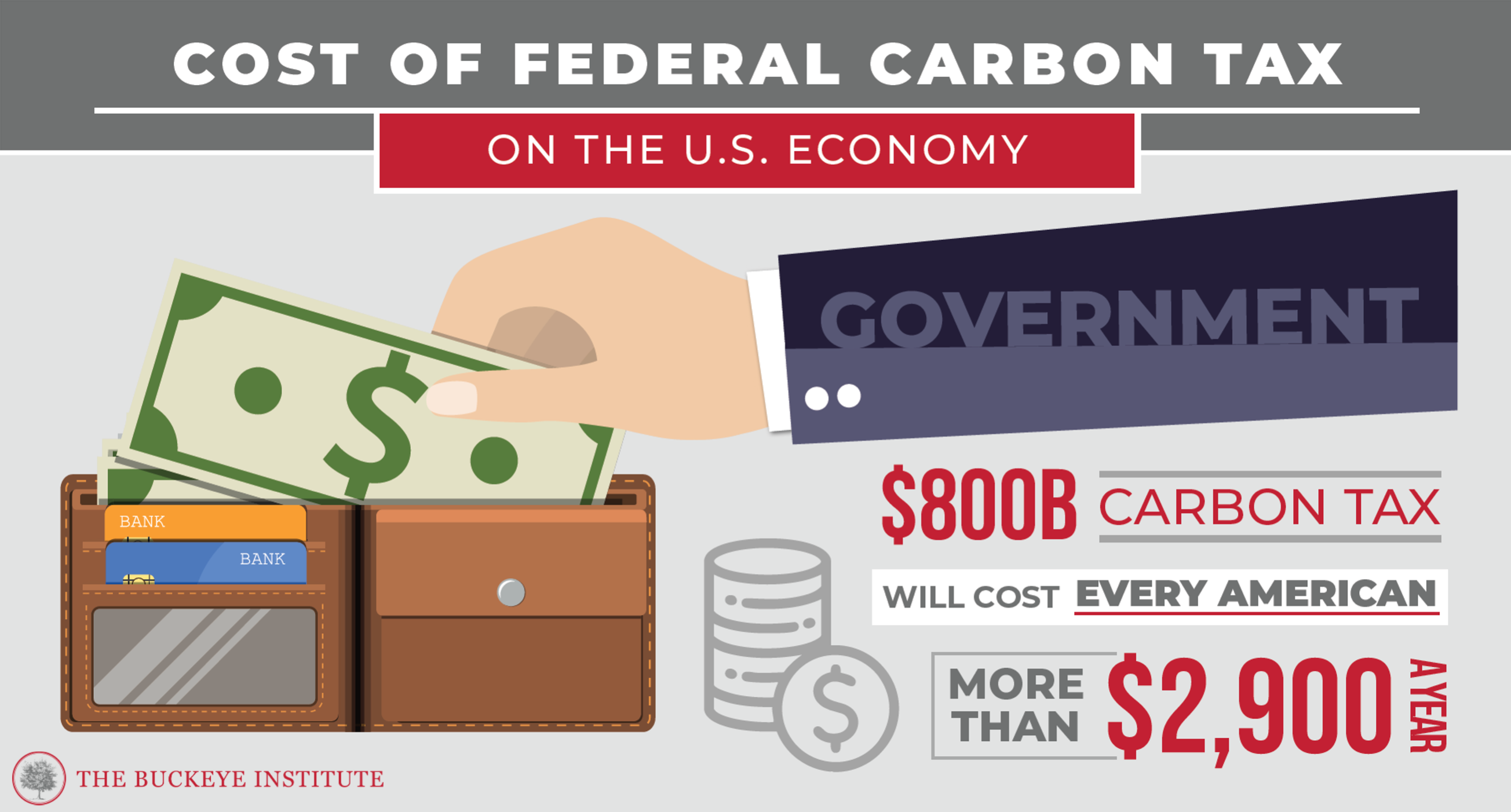
“Climate activists have pursued extreme net-zero polices for decades,” said Rea S. Hederman Jr., executive director of the Economic Research Center and vice president of policy at The Buckeye Institute, and co-author of the report. “As The Buckeye Institute’s modeling reveals, if successful, their efforts could result in the largest one-year tax increase in U.S. history, deprive workers of more than 2.4 million jobs, and curb economic growth by a devastating 10 percent in the first year alone.”
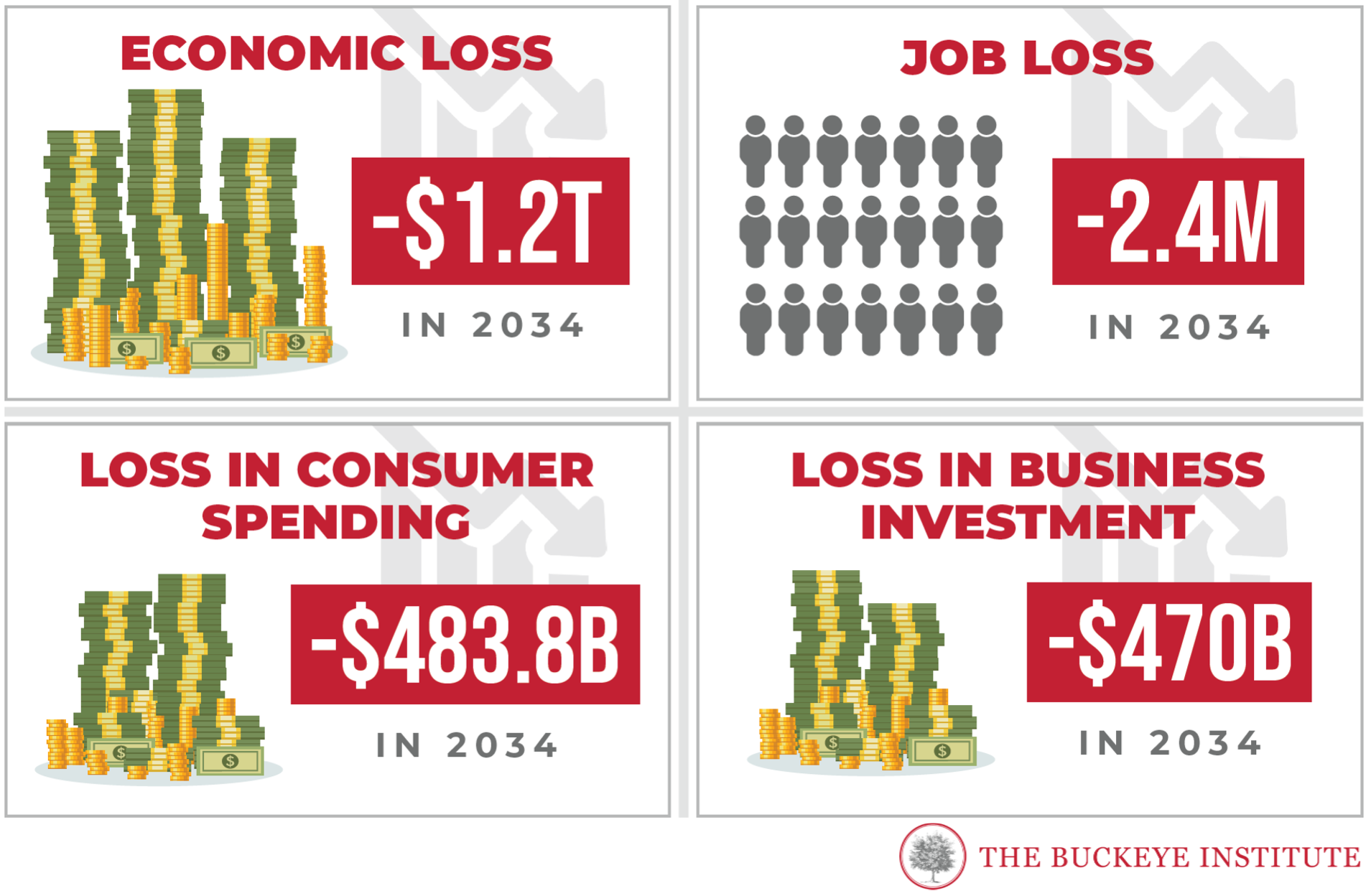
To gauge the economic harm a federal carbon tax would have on the American economy, The Buckeye Institute used its dynamic scoring model—STELA (state tax and economic long-run analysis) to simulate a hypothetical $800 billion annual carbon tax as an effective proxy for the net-zero goal that activists are pursuing as part of their broader environmental, social, and governance (ESG) agenda. The costs of a federal carbon tax to achieve net-zero carbon emissions are:
| 2027 | 2034 | |
| Economic Loss | -$980.4 billion | -$1.2 trillion |
| Job Loss | -2 million | -2.4 million |
| Loss in Consumer Spending | -$378.4 billion | -$483.8 billion |
| Loss in Business Investment | -$385.8 billion | -$470 billion |
Climate activists have tried various means to achieve net-zero carbon emissions—most recently through public nuisance litigation—with one legal advisor to the plaintiffs in Suncor Energy v. County Commissioners of Boulder County admitting that the end goal of their legal strategy amounts to “an indirect carbon tax.”
Suncor, pending before the U.S. Supreme Court, is another attempt to impose net-zero carbon emissions, this time through the courts after failing to do so through Congress and federal regulation. Other attempts have failed or fallen short, including cap-and-trade legislation, the Paris Climate Accords, ESG regulatory mandates, the Clean Power Plan, Clean Power Plan 2.0, the Green New Deal, and the so-called Inflation Reduction Act.
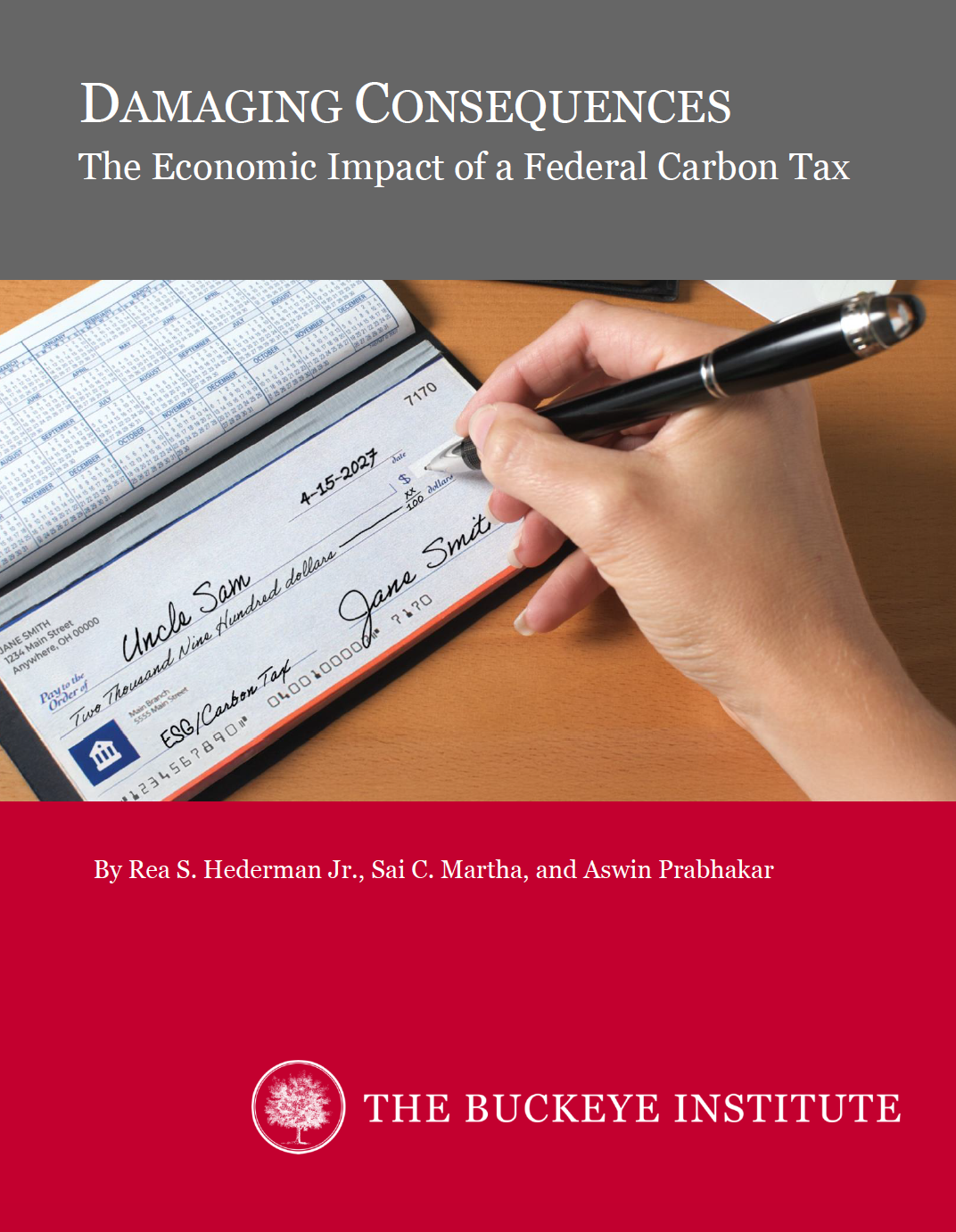
Rea S. Hederman Jr, executive director of the Economic Research Center and vice president of policy; Sai C. Martha, economic research analyst; and Aswin Prabhakar, economic research analyst, co-authored Damaging Consequences: The Economic Impact of a Federal Carbon Tax.
# # #