

In New Report, The Buckeye Institute Outlines Solutions to Ohio’s Long-Term Care Crisis
Jul 22, 2026Columbus, OH – In a new policy report, The Cost of Aging, The Buckeye Institute offers durable and cost-effective solutions to providing long-term care for Ohio’s aging population. With 2.2 million residents older than 65, and an elderly population that is growing faster than the national average, the need to address the state’s long-term care crisis is now.
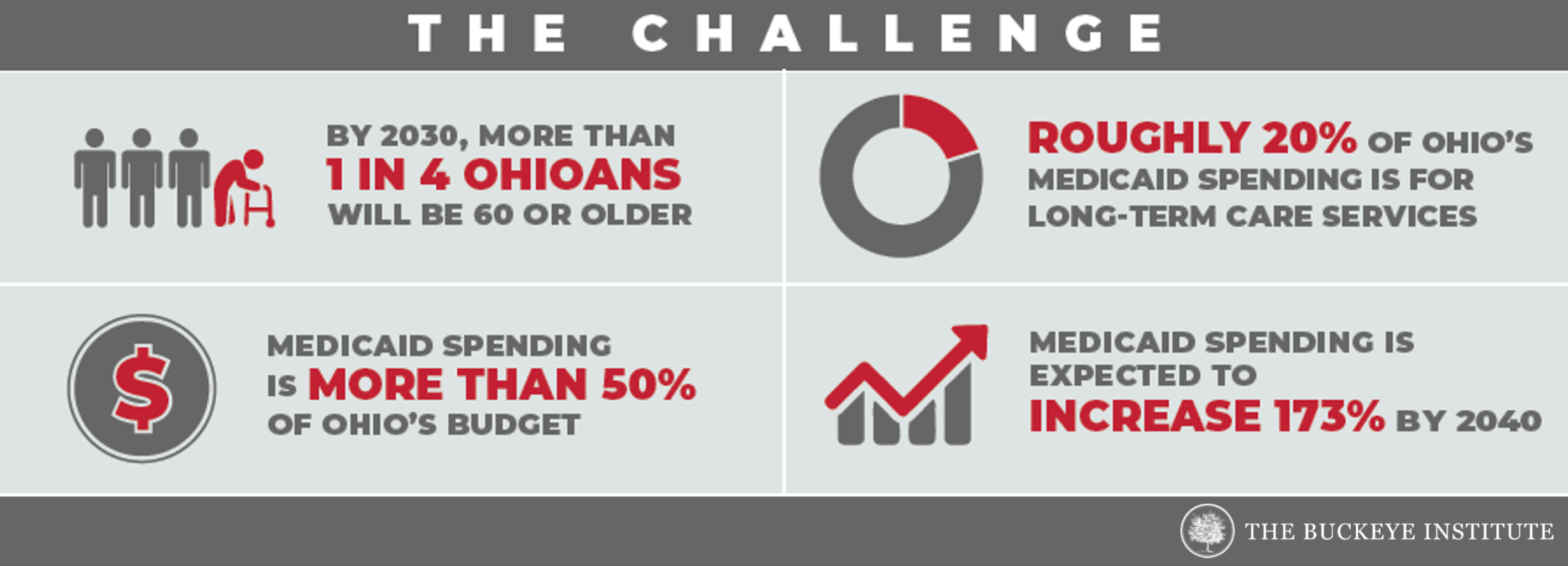
“By 2030, more than one in four Ohioans will be 60 or older, and the state’s healthcare infrastructure, workforce, and financing mechanisms are not equipped to meet growing demand,” said Rea S. Hederman Jr., vice president of policy at The Buckeye Institute and co-author of The Cost of Aging. “Fortunately, there are solutions, and The Buckeye Institute’s report offers policymakers a series of comprehensive recommendations that are essential for meeting demand and sustaining Ohio’s fiscal health.”
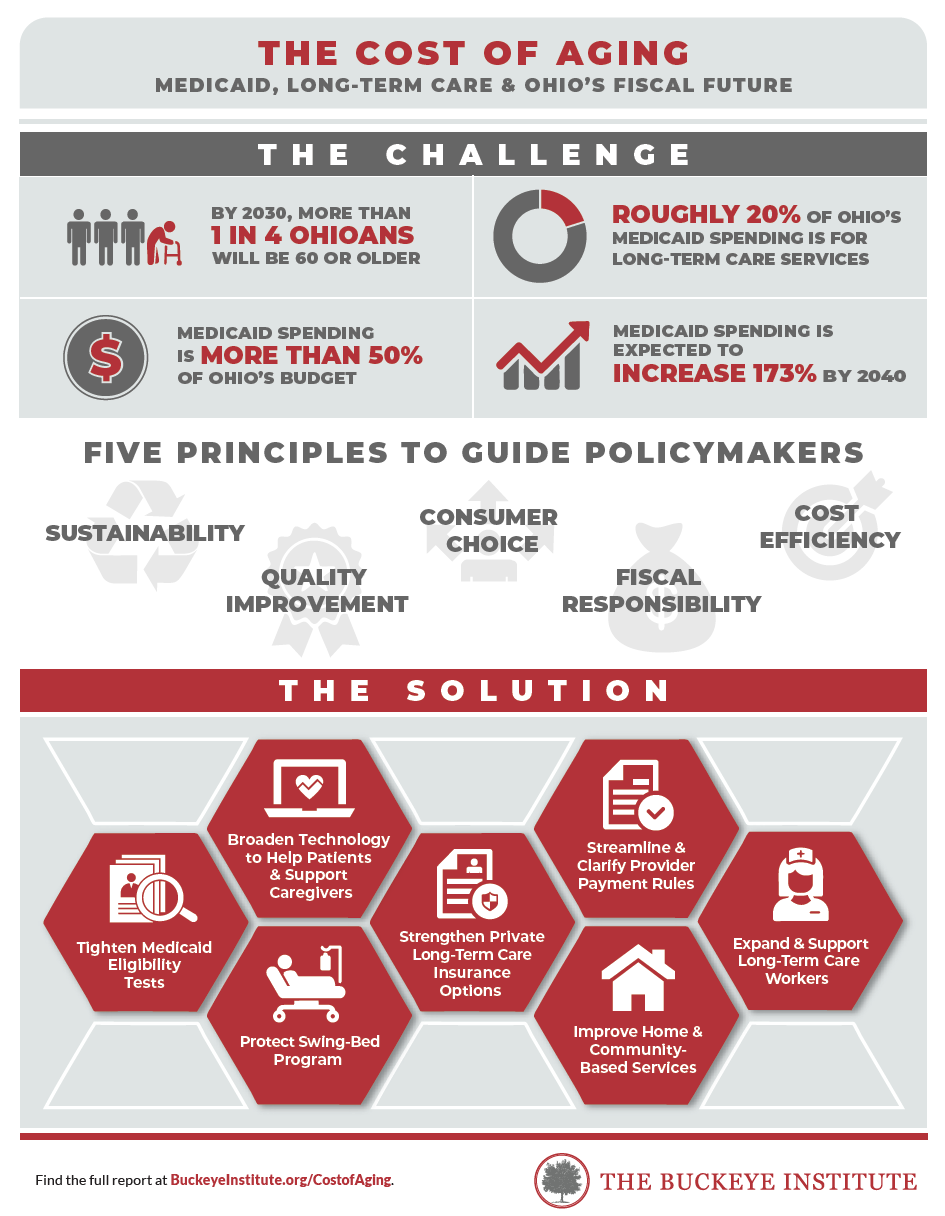
In its report, The Buckeye Institute outlines the crisis facing Ohio: 1) by 2030, more than one in four Ohioans will be 60 or older; 2) an elderly population that is growing faster than the national average; 3) an older adult population that ranks sixth in the nation; and 4) Medicaid spending that already accounts for more than 50 percent of the state’s budget.
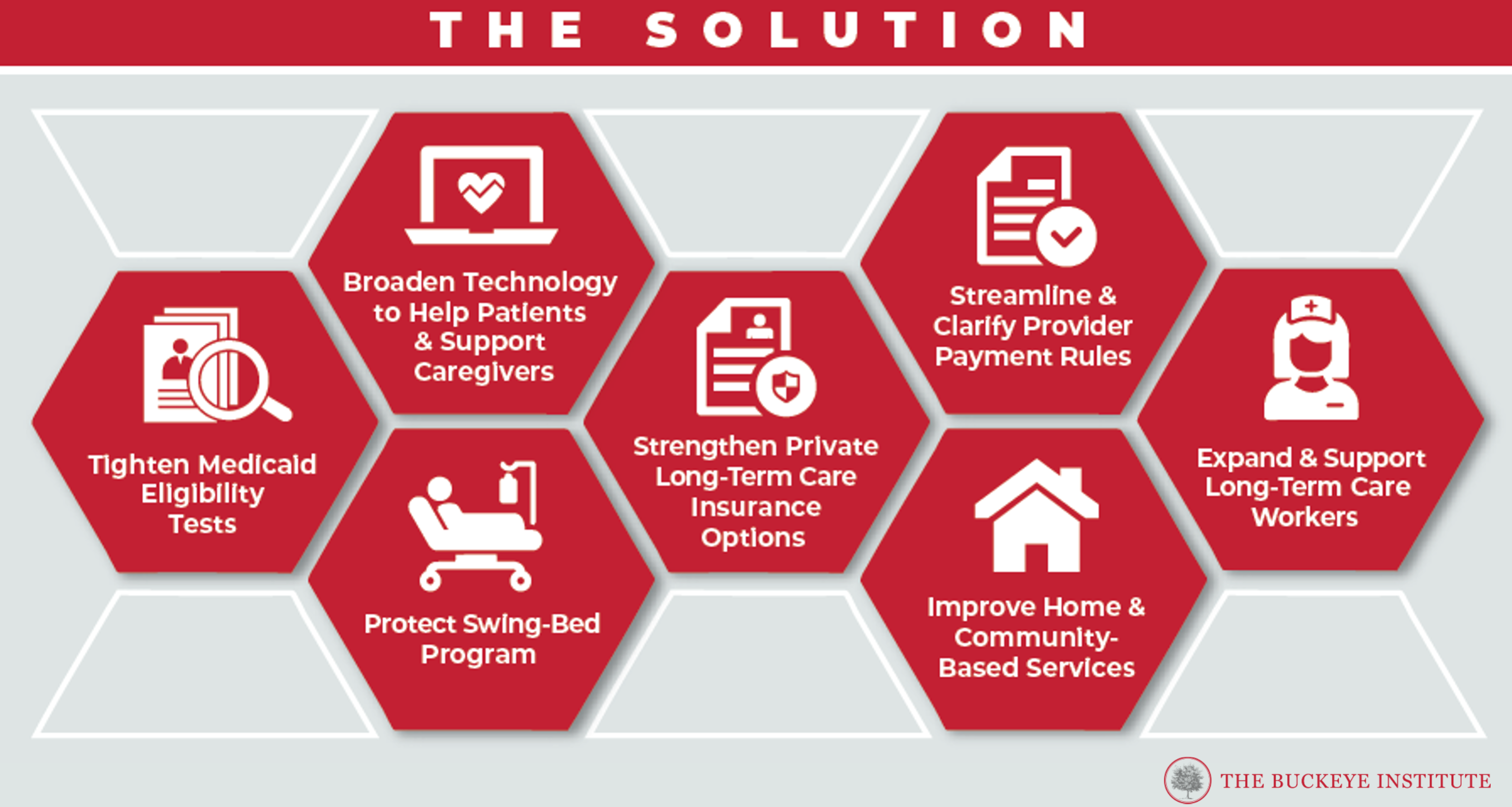
Improvements to Ohio’s long-term care policies must be grounded in five fundamental principles: sustainability, consumer choice, cost efficiency, quality improvement, and fiscal responsibility. Using these principles, The Buckeye Institute details recommendations on how policymakers can:
- Strengthen the state’s community-based care infrastructure while enhancing its integrity;
- Modernize and simplify Medicaid reimbursement;
- Reduce regulatory barriers to care without sacrificing accountability;
- Expand the direct care workforce;
- Incentivize private long-term care planning; and
- Deploy advanced technologies to support caregivers.
Ohio’s older adult population is growing, Medicaid is taking up more of the state’s budget, and the care workforce that holds the system together is understaffed, underpaid, and undertrained. These are not separate problems. They are connected failures of a long-term care system that has not modernized to meet demands. Ohio must face its long-term care crisis now before fiscal pressures foreclose more affordable solutions.
Rea S. Hederman Jr, executive director of the Economic Research Center and vice president of policy at The Buckeye Institute, and Donavan Rees Lingerfelt, economic research assistant, co-authored The Cost of Aging: Medicaid, Long-Term Care, and Ohio’s Fiscal Future.
# # #