The Buckeye Institute to SCOTUS: Unconstitutional Carbon Tax Would Devastate U.S. Economy
May 26, 2026Columbus, OH – On Thursday, The Buckeye Institute filed its amicus brief in Suncor Energy v. County Commissioners of Boulder County, calling on the U.S. Supreme Court to stop climate activists from using the courts to dictate America’s energy policy and impose a de facto nationwide carbon tax.
“Failing to achieve a carbon tax through the normal legislative process, this case represents the latest effort of climate activists to implement their preferred policy—net-zero carbon emissions—through litigation rather than legislation,” said Andrew M. Grossman, counsel of record on this brief, senior legal fellow at The Buckeye Institute, and partner in the Washington, D.C., office of BakerHostetler LLP.
Climate activists have tried various means to achieve net-zero carbon emissions—this most recent attempt through public nuisance litigation—with one legal advisor to the plaintiffs in this case admitting that the end goal of their legal strategy amounts to “an indirect carbon tax.”
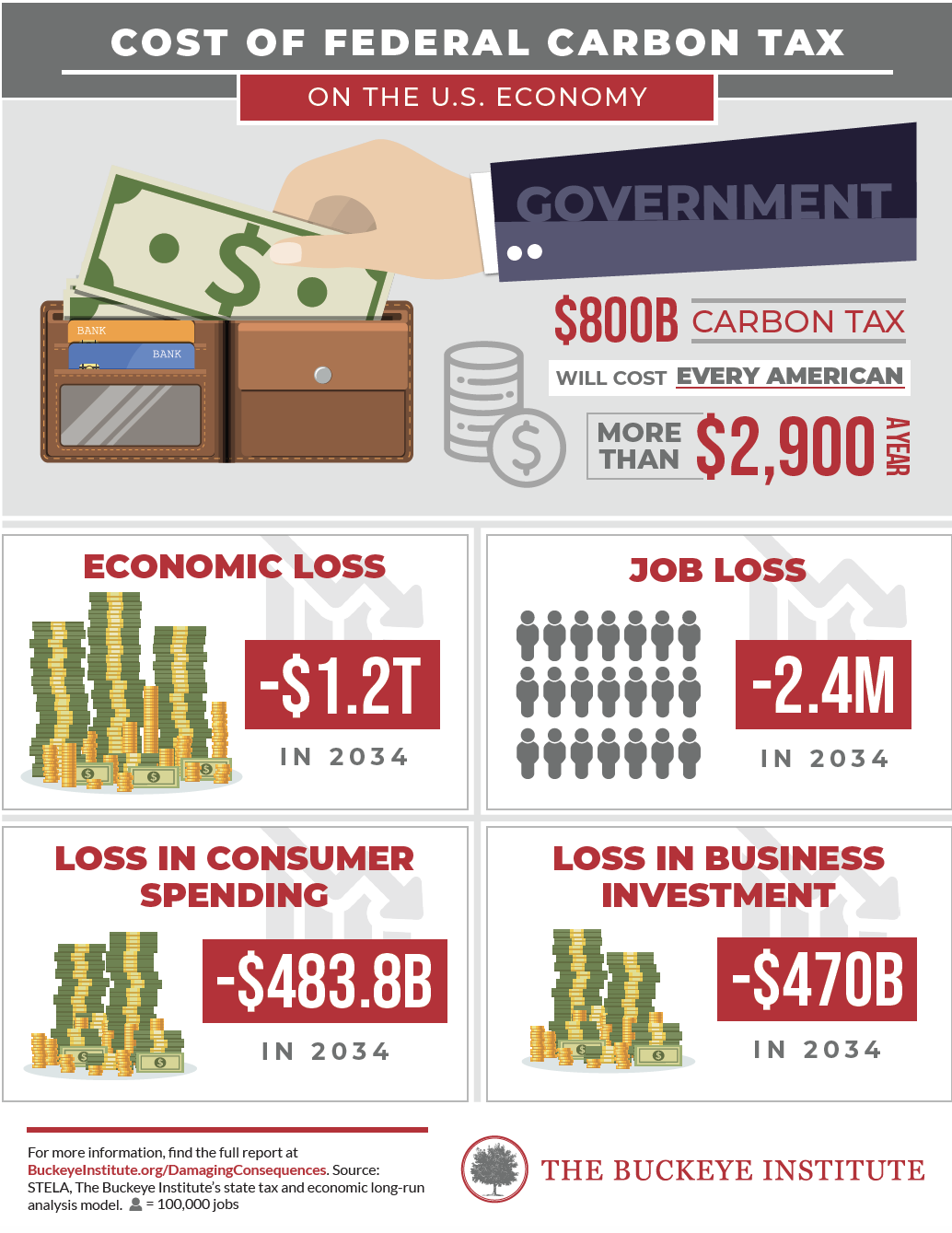
In its brief, The Buckeye Institute argues that Boulder County’s lawsuit is tantamount to a de facto carbon tax and shares Buckeye’s own research, which found that an $800 billion annual carbon tax would cost every American $2,900 annually and devastate the U.S. economy, resulting in $1.2 trillion in economic loss in 2034. The Buckeye Institute further asserts that this unconstitutional carbon tax violates the due process and commerce clauses of the U.S. Constitution, and it interferes with the president’s prerogative to set foreign policy.
“This case is just one of a rash of public nuisance climate lawsuits spreading across the nation in a dangerous attempt to use the courts to impose a nationwide carbon tax,” said Robert Alt, president and chief executive officer of The Buckeye Institute. “The Buckeye Institute’s own economic modeling confirms the devastating economic effects of this unconstitutional tax.”
# # #