

Press Releases
For media inquiries, please contact:
Lisa A. Gates
Vice President of Communications
Lisa@BuckeyeInstitute.org
(614) 224-3255
Supreme Court of the United States (SCOTUS) Takes The Buckeye Institute’s Home Distilling Case
October 19, 2026
The U.S. Supreme Court announced on Monday that it will hear The Buckeye Institute’s monumental case challenging the federal prohibition on home distilling: U.S. Department of Justice v. McNutt (formerly McNutt v. U.S. Department of Justice). The U.S. Supreme Court now has a tremendous opportunity to consider the scope and reach of congressional power to regulate activities under the taxing power and the necessary and proper clause. “The Buckeye Institute is thrilled that the U.S. Supreme Court took the McNutt case and our clients will have their day in court.”
The Buckeye Institute: Ohio’s Job Market Stalls in September
October 16, 2026
The Buckeye Institute commented on the September 2026 jobs report from the Ohio Department of Job and Family Services, saying, “Ohio’s unemployment rate ticked up to 3.4 percent in September, and the labor force participation rate fell to 61.2 percent, further evidence that fewer Ohioans are looking for work, and one reason that the state’s unemployment rate is much lower than the national average. While private-sector hiring was revised up from the August jobs report, September’s job losses kept private-sector employment flat over the past two months.”
The Buckeye Institute Reacts to Ruling in Ohio EdChoice Case
October 15, 2026
The Buckeye Institute issued a statement following Ohio’s Tenth District Court of Appeals decision in Columbus City School District v. State of Ohio, saying, “As long-time advocates of giving all Ohio families the power to choose the best educational setting for their children, The Buckeye Institute is disappointed by the appeals court decision. If allowed to stand, the decision will deny tens of thousands of Ohio students the education that best fits their needs.”
The Buckeye Institute Calls on SCOTUS to Protect Individual Rights
October 13, 2026
The Buckeye Institute filed an amicus brief with the U.S. Supreme Court urging the justices to hear Perry v. Marteney. West Virginia removed a student from a virtual public school after her parents declined to vaccinate her because of their religious beliefs, even though the state exempts homeschoolers, learning pods, and microschools from its own vaccine requirements. “This case presents the U.S. Supreme Court with the opportunity to clarify that the state should not be given deferential treatment when it wants to infringe on individual rights.”
The Buckeye Institute Urges SCOTUS to End Discriminatory Workplace Initiatives
October 09, 2026
The Buckeye Institute filed an amicus brief in Young v. Colorado Department of Corrections, urging the U.S. Supreme Court to hear the case and look to Justice John Marshall Harlan’s dissent in Plessy v. Ferguson and his expansive view of the 14th Amendment to end discriminatory workplace equity initiatives, which violate the U.S. Constitution and the U.S. Civil Rights Act of 1964. “Applying the reasoning of Harlan’s Plessy dissent, the discrimination that Mr. Young experienced is no less odious than ‘separate but equal.’”
The Buckeye Institute Exposes Harmful Impacts of Washington State’s 9.9% Income Tax
October 08, 2026
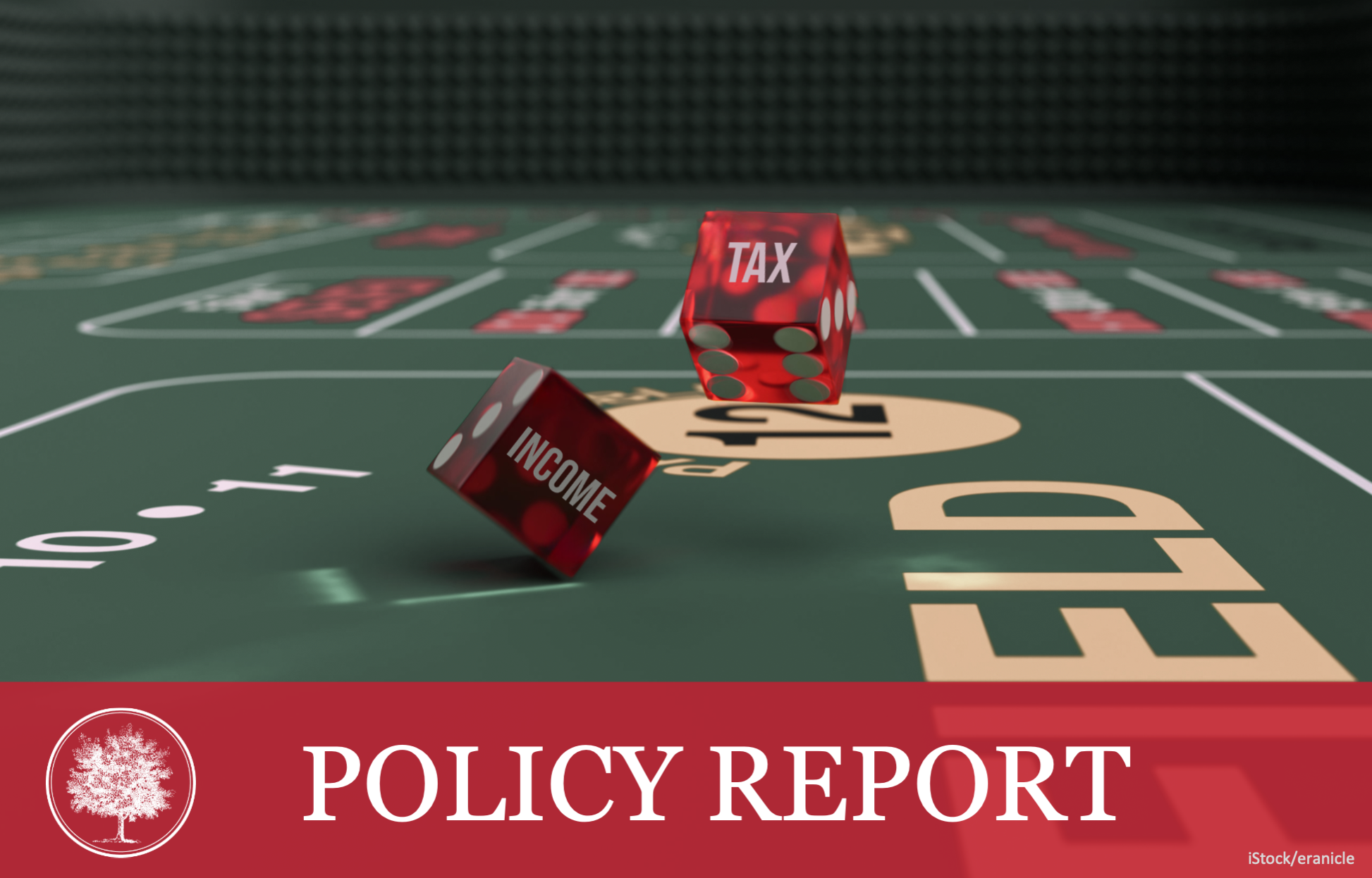
Using STELA—The Buckeye Institute’s dynamic scoring model—The Buckeye Institute revealed that a proposed 9.9 percent Washington state income tax on high earners included in Senate Bill 6346 would ravage the state’s economy with a loss of $4.9 billion in economic growth. The findings were published in Washington’s Tax Gamble, in partnership with Washington Policy Center, and provide voters and policymakers with a better understanding of how Senate Bill 6346 will affect the state’s businesses, families, economy, and revenues.
The Buckeye Institute Challenges Akron’s Tax Grab at Ohio Supreme Court
September 29, 2026
The Buckeye Institute filed its brief with the Ohio Supreme Court in Kresevic v. Kimmel, asking the court to accept the case and reverse the lower court rulings, telling the city of Akron that a settlement package Ms. Kresevic received from a former employer does not represent wages and is therefore not subject to the city’s municipal income tax. This case affects the rights of every Ohioan who pays municipal income tax, and if the lower court rulings are allowed to stand, it will allow cities to evade Ohio law.
The Buckeye Institute Urges SCOTUS to Hear Challenge to Maine’s Firearm Waiting Period
September 28, 2026
The Buckeye Institute filed its amicus brief asking the U.S. Supreme Court to hear Beckwith v. Frey, a challenge to Maine’s unconstitutional law that imposes a 72-hour waiting period on firearm sales, even when the buyer has already passed a background check. “What is at stake in this case is whether law-abiding citizens—who have already passed a background check—can be denied their constitutionally protected Second Amendment Rights. They cannot.”
The Buckeye Institute Tells Second Circuit: New York’s Orwellian Edict Silences Speech
September 25, 2026

The Buckeye Institute filed its amicus brief in Wachter v. James, calling on the U.S. Court of Appeals for the Second Circuit to tell New York that its Orwellian “guidance letter” silences speech and violates the First Amendment. “Albany may have dressed up its Orwellian edict as a guidance letter, but its threat to remove school board members from office for expressing opinions different from the government’s—or allowing citizens at public hearings to express contrary opinions—is a clear violation of the First Amendment.”
The Buckeye Institute Joins New Pro-Build Energy Coalition in Ohio
September 24, 2026

The Buckeye Institute joined Build Ohio First, a new pro-build energy coalition focused on driving economic growth through affordable, reliable, abundant energy. The new free-market energy advocacy organization was launched to advance practical policy solutions for Ohio’s future energy needs. Build Ohio First is a coalition led by The Buckeye Institute and Americans for Prosperity – Ohio and supported by Powering Prosperity to encourage Ohio policymakers to build upon their successful efforts to grow Ohio’s economy through affordable energy production.