

Jay R. Carson
Union vs. goats, a case study for why members should question union leadership
July 24, 2026
At The Center Square, The Buckeye Institute highlights Sheldon v. OAPSE, its union wage theft case pending before the Ohio Supreme Court, and questions a Columbus city union’s baaad decision in filing a grievance challenging the city’s use of goats to clear brush from city property, writing, “Whether cost-saving efficiency for taxpayers comes from high-tech AI or low-tech weed eaters, the union’s recurring objections highlight the inherent conflict between its leaders, its taxpaying members, and the public.”
A Seat at the Sitting: The February Docket in 90 Minutes or Less
February 19, 2026
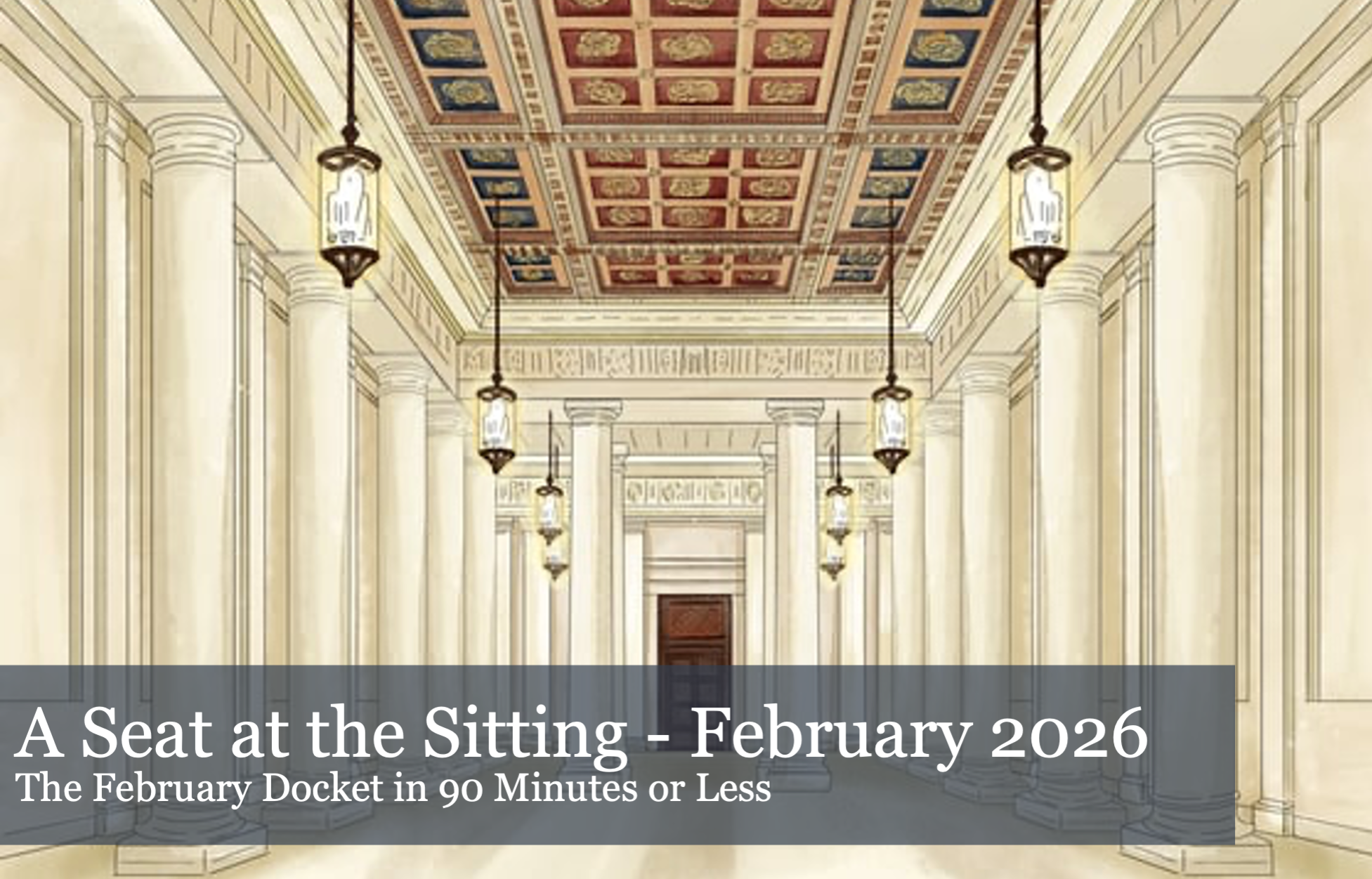
Each month, the Federalist Society convenes a panel of constitutional experts to discuss the U.S. Supreme Court’s upcoming docket. This month’s panel featured Jay R. Carson, senior litigator at The Buckeye Institute.
Cleveland Judge’s Ruling Allows Buckeye Institute Tax Case to Move Forward
September 29, 2021
The Buckeye Institute issued a statement after Cuyahoga County Court of Common Pleas Judge Dick Ambrose denied the city of Cleveland’s motion to dismiss Morsy v. Dumas, allowing the case to move forward. “Today’s ruling allows The Buckeye Institute’s case to move forward and ensures that Dr. Manal Morsy will have her day in court to challenge the city of Cleveland’s unconstitutional attempt to impose an extraterritorial municipal income tax..."
The Buckeye Institute: House Bill 157 Would Protect Taxpayers from Unconstitutional Emergency-Based Local Income Tax System
May 18, 2021
Jay R. Carson, senior litigator at The Buckeye Institute, issued a statement after House Bill 157 was voted out of the Ohio House Ways and Means Committee, saying, “House Bill 157 protects Ohio’s taxpayers by re-affirming the well-established constitutional principle that a city can only tax people who live in that city or work in that city.”
An Unconstitutional Local Tax Grab
April 11, 2021
In a piece for National Review, The Buckeye Institute and the Mackinac Center for Public Policy look at unconstitutional local tax grabs. Authors Jay Caron, senior litigator at The Buckeye Institute, and Patrick Wright, vice president for legal affairs at the Mackinac Center in Michigan write, “What’s a city official to do when a pandemic slams tax revenue? In our home states of Michigan and Ohio, state and local leaders have an odd — and unconstitutional — answer. They want cities to tax people who neither live nor work within their limits.”
Senate Bill 94’s Unintended Consequences
March 31, 2021
In a new piece, The Buckeye Institute looks at language tucked inside Senate Bill 94, that “should concern public interest groups on both sides of the proverbial aisle.” Jay R. Carson writes, “Senate Bill 94’s disclosure mandate is the wrong answer in search of a problem. If a court believes that the funding source of a case is relevant to the litigation at bar, the court can always order the identity disclosed. But if such disclosure is so irrelevant to the case that the court sees no reason to order it, then Senate Bill 94’s mandate serves no purpose.”
Revisit how cities are being funded
December 07, 2020

In the Tribune Chronicle and The Vindicator, The Buckeye Institute responds to the concerns of city officials who worry about losing the ability to impose income taxes on nonresidents’ income. Jay R. Carson, senior litigator at Buckeye’s Legal Center, writes, “Adequately funding our cities through the pandemic and beyond should be a priority for lawmakers, but the U.S. and Ohio constitutions both recognize that no matter how important or worthwhile a governmental goal is, the means that the government uses to achieve it must comport with due process.”
Legal Center
March 15, 2016